Diagnosing Filter Clogging in Industrial HVAC Systems
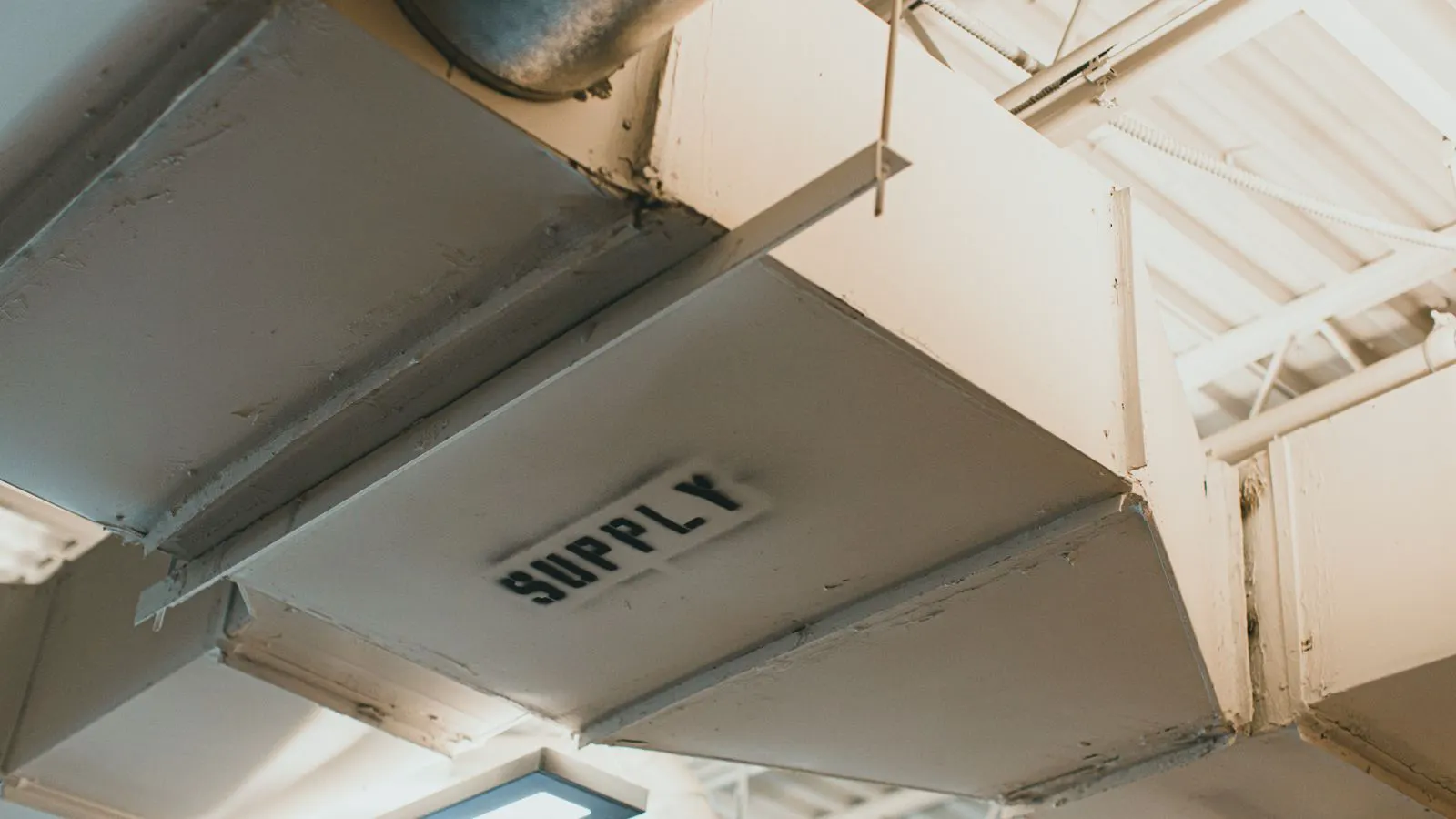
Filter clogging in industrial HVAC systems often stems from incorrect media selection, oversized filters, or poor airflow management. This guide details how to identify the root cause of excessive dust accumulation through specific symptom analysis and targeted maintenance adjustments.
- Monitor pressure drop regularly to detect clogging before it causes system failure
- Match filter media and size to the specific dust load and airflow conditions
- Implement a structured air filter maintenance schedule based on actual performance data
- Address airflow imbalances and ductwork issues that contribute to uneven filter loading
- Document all changes to filter configurations and maintenance procedures for future reference
Why Are Your Industrial HVAC Filters Clogging Faster Than Expected?
Excessive dust accumulation on filters signals that something is wrong with the system. The filters are doing their job, but the conditions around them are pushing them past normal operating limits. This usually shows up as higher energy costs, reduced airflow, and shortened filter replacement cycles.
When you notice filters loading up quickly, the problem is rarely a single factor. It is more often a combination of media selection, airflow management, and maintenance practices that work together to accelerate clogging. Understanding these interactions is what allows you to fix the root cause rather than just replacing filters more often.
The following sections break down the most common symptoms of filter clogging, their likely causes, and practical steps to address each one.
What Are the Common Symptoms of Filter Clogging?
Filter clogging does not announce itself with a single warning. It builds up over time and shows itself in several ways that can be easy to miss if you are not watching for them.
The most obvious sign is a rapid increase in pressure drop across the filter. When a filter loads with dust, the air has to push through a more restrictive medium. This creates resistance that your system has to overcome, which your fans work harder to do. If your pressure drop readings climb steadily between planned replacements, the filter is loading faster than it should.
Another clear symptom is reduced airflow at supply outlets. When filters clog, the total system resistance goes up. The fans may run at the same speed, but the actual volume of air reaching the occupied spaces drops. You may notice drafts weakening, temperature zones becoming less uniform, or equipment in the conditioned space running longer to maintain setpoints.
Visible dust buildup on the filter media is also a direct indicator. If you open a filter and see a thick layer of particulate on the first few rows of media, or if the dust pattern looks uneven, you have a clogging issue. The pattern matters as much as the amount. A uniform layer means the filter is working as designed. An uneven layer, with one side heavily loaded while the other stays relatively clean, points to airflow problems.
Finally, shortening filter replacement intervals is a practical indicator. If you used to replace filters every six months and now you need to do it every three months under the same operating conditions, something has changed. This change could be in the dust load, the airflow, or the filter itself.
What Are the Most Likely Causes of Excessive Clogging?
Once you confirm that clogging is happening faster than normal, you need to identify what is driving it. The causes fall into a few broad categories, and they often overlap.
Incorrect filter media selection is one of the most common causes. If the filter media is not matched to the type and concentration of dust in the air, it will not last as long as expected. Fine particulate loads require denser media or higher micron ratings to capture particles without loading too quickly. Coarser dust may work better with open-structure media that allows for higher initial dust holdup. Getting this wrong means the filter either captures too much too fast or lets through particles that then accumulate elsewhere.
Oversized filters can also cause clogging problems. It sounds counterintuitive, but if a filter is larger than the system requires, the airflow velocity through the media drops. At lower velocities, particulate particles settle more easily and can be re-entrained by air movement. The dust layer becomes compacted and less effective, which can actually increase clogging over time. The filter needs enough velocity to keep the dust layer loose and permeable.
Undersized filters present the opposite problem. When the filter is too small for the airflow, the velocity through the media is too high. Particles impact the media with greater force and embed more deeply. The filter loads quickly in the first few rows, and the pressure drop rises sharply. This creates a high pressure drop condition that stresses the fan and reduces system efficiency.
Airflow imbalances are another major cause. If the ductwork has leaks, or if the fan is not delivering air evenly across the filter face, some parts of the filter will see far more dust than others. This uneven loading means the heavily used sections clog first, while the rest of the filter sits underutilized. The result is a filter that appears to be clogging unevenly and may need replacement sooner than the full media area would suggest.
Poor maintenance practices accelerate clogging as well. If you are not cleaning the filter housing regularly, or if you are not replacing filters at the correct interval, the system operates with degraded performance. Old housings can harbor dust that gets recirculated, and filters that have already loaded significantly have less capacity to capture additional particles before reaching their limit.
How Can You Diagnose the Root Cause?
Diagnosing filter clogging requires a methodical approach. Start with the data you have and work through the system step by step.
Check your pressure drop records first. Compare the current readings to your baseline from when the filters were new. If the pressure drop has doubled or tripled before the scheduled replacement date, the filter is loading abnormally. Note whether the increase is linear or sudden. A linear increase suggests a consistent dust load. A sudden spike may indicate a process change, a new source of particulate, or an airflow disruption.
Inspect the filter visually. Remove it and look at the dust pattern. If the loading is uniform, the problem is likely in the dust load or the filter media. If the loading is uneven, focus on airflow. Check the ductwork for leaks, inspect the fan for proper operation, and verify that the air distribution across the filter face is even. You can use a simple anemometer at multiple points across the filter inlet to check for velocity variations.
Review your filter specifications. Confirm that the media type, micron rating, and filter size match the requirements for your application. If the dust load has changed, even slightly, the original filter selection may no longer be appropriate. A factory change in the type of material being processed, or a shift in the size of particles being generated, can alter the dust load enough to require a different filter.
Examine your maintenance schedule. Are you replacing filters at the right interval? Are you cleaning the housing before installing new filters? Is the fan operating at the correct speed? Each of these factors contributes to how quickly the filter loads, and each one is a variable you can adjust.
The table below summarizes the most common symptoms of filter clogging, their likely causes, and the actions to take.
| Symptom | Likely cause | What to do |
|---|---|---|
| Steady pressure drop increase | Consistent dust load; media not matched to particle size | Verify filter media selection; consider higher micron rating or denser media |
| Sudden pressure drop spike | New particulate source; process change; fan speed adjustment | Identify and control the new dust source; check fan settings |
| Reduced airflow at supply outlets | Filter clogging; ductwork restriction; fan performance issue | Inspect ductwork; clean or replace filter; verify fan operation |
| Uneven dust loading on filter media | Airflow imbalance; duct leaks; improper fan placement | Check ductwork for leaks; verify even air distribution across filter face |
| Shortened replacement intervals | Oversized or undersized filter; poor maintenance | Re-evaluate filter size; implement regular housing cleaning |
| High pressure drop with low dust loading | Oversized filter causing low airflow velocity | Reduce filter size to increase velocity; check for re-entrainment |
How Can You Fix a High Pressure Drop Condition?
A high pressure drop is both a symptom and a cause. It tells you the filter is loaded, but it also strains the system and can make clogging worse if left unchecked. Fixing it requires addressing the load and the airflow simultaneously.
Start by cleaning the filter housing. Dust that accumulates in the housing around the filter can be drawn back into the system, especially if there are leaks or if the seal is not tight. Remove the old filter, brush out the housing, and wipe the mating surfaces. Check the gasket or seal for wear. A damaged seal allows bypass air, which changes the airflow pattern and can cause uneven loading.
Replace the filter with one that is correctly sized. If the current filter is oversized, switch to a smaller unit that maintains the proper airflow velocity. If it is undersized, upgrade to a larger unit that reduces the velocity and allows the dust layer to remain loose. The goal is to match the filter size to the fan’s capacity and the system’s design intent.
Adjust the fan speed if necessary. If the fan is running faster than required, the velocity through the filter is too high, and the filter loads quickly. If it is running slower, the dust settles and re-entrains. Check the fan control settings and adjust to the recommended speed for your system.
Monitor the pressure drop after these changes. The readings should stabilize at a level that is within the manufacturer’s recommended range for the filter. If they continue to rise, there is still an underlying issue, and you need to go back to the diagnostic steps.
How Can You Improve Air Filter Maintenance Practices?
Good maintenance is the backbone of a filtration system that performs reliably. It is not just about swapping out filters. It is about creating a routine that keeps every component in the system working as intended.
Develop a maintenance schedule based on actual performance data, not just calendar dates. Track pressure drop readings over time and use that trend to predict when the filter will reach its end of life. Some systems may need filters changed quarterly, while others can go six or nine months. The data tells you what is right for your specific installation.
Include housing inspection in every service visit. Check for dust accumulation, seal integrity, and any signs of air bypass. A clean housing with a good seal keeps the airflow where it should be and prevents the recirculation of captured particles.
Keep a log of all filter changes, pressure drop readings, and any adjustments made to the system. This log becomes your baseline. When you notice a change in performance, you can compare it against the recorded data to identify what happened and when. It also helps when you are talking to a supplier or engineer about a problem. You can show them the trend and ask for a specific recommendation rather than a general one.
Train the people who perform the maintenance to recognize the signs of clogging. They should know what a healthy filter looks like, what the pressure drop should be, and what to do when the numbers drift. A quick visual check and a pressure reading can catch a problem before it becomes a shutdown.
What Are the Best Prevention Strategies for Long-Term Performance?
Prevention is about setting the system up so that clogging does not become a recurring issue. It starts at the design stage and continues through operation.
Match the filter to the application. This means understanding the dust load, the particle size distribution, and the airflow requirements. If the application changes, review the filter selection. A new process, a different material, or a change in the number of operators can all alter the dust load. The filter that worked three years ago may not work today.
Maintain the ductwork. Leaks, blockages, and poor design all contribute to airflow imbalance. A well-sealed duct system with proper sizing ensures that air reaches the filter evenly. This keeps the dust loading uniform and extends filter life.
Control the dust at the source. If you can reduce the amount of particulate entering the HVAC system, the filter will last longer. This can mean improving enclosure, changing the process, or adding a pre-filter upstream. The less dust the main filter has to deal with, the slower it clogs.
Use the right media. Some media types are better at holding dust without clogging. Open-structure media can handle high dust loads with lower pressure drop. If your application generates a lot of fine dust, a denser media may be necessary, but it will load faster. The trade-off is between filtration efficiency and filter life. Choose based on what matters most for your system.
How Often Should You Replace Industrial HVAC Filters?
There is no single answer to this question. The replacement interval depends on the dust load, the filter size, the media type, and the system design. A filter in a clean environment with coarse dust may last a year or more. A filter in a high-dust environment with fine particulate may need changing every few months.
The best way to know is to monitor the pressure drop. Replace the filter when the pressure drop reaches a level that indicates the filter is no longer performing efficiently. For many systems, this is when the pressure drop has increased by a certain percentage from the clean baseline. The exact percentage varies by application, but it is a useful trigger.
Do not wait until the filter is completely saturated. By then, the system is already working harder, the airflow is reduced, and the filter may be damaged. Replacing it at the right time keeps the system running efficiently and protects the fan from overload.
What Should You Look for in a Supplier?
When you are choosing a supplier for industrial HVAC filters, you need more than a catalog. You need a partner who understands your application and can help you select the right product.
Look for a supplier that asks questions. They should want to know about your dust load, your airflow, your current filter performance, and your maintenance practices. They should be willing to review your data and make a specific recommendation rather than selling you a generic product.
Check their technical support. If you have a problem with clogging or pressure drop, you need someone to talk to. A good supplier will help you diagnose the issue, suggest a fix, and provide the right replacement. They should be responsive and knowledgeable.
Consider the range of products they offer. You may need different filters for different parts of the system, or you may need to change the filter type as your application changes. A supplier with a broad range and the ability to customize can save you from having to switch vendors every time your needs shift.
Finally, evaluate their reliability. Do they deliver on time? Are the products consistent? Do they stand behind their work? A filter that clogs quickly is a waste of money, and a supplier who does not take responsibility for the fit and performance will not help you solve the problem.
Frequently asked questions
How do I know if my filter is the wrong size?
If the pressure drop is very low and the dust layer is compacted, the filter may be oversized. If the pressure drop rises quickly and the dust is embedded in the first few rows, the filter may be undersized.
Can I use a pre-filter to extend the life of my main filter?
Yes. A pre-filter captures the larger particles first, which reduces the load on the main filter. This can significantly extend the main filter's life, especially in high-dust environments.
What is the best media type for fine dust?
Denser media with a higher micron rating is better for fine dust. It captures smaller particles but will load faster. Open-structure media is better for coarse dust that you want to hold without excessive pressure drop.
How often should I check the pressure drop?
Check it monthly or whenever you perform routine maintenance. Track the readings over time so you can see the trend and predict when the filter needs replacement.
What should I do if the pressure drop is high but the filter looks clean?
Check the ductwork for leaks or blockages. Verify the fan speed and the air distribution across the filter face. A high pressure drop with low dust loading can indicate an airflow problem rather than a clogging issue.