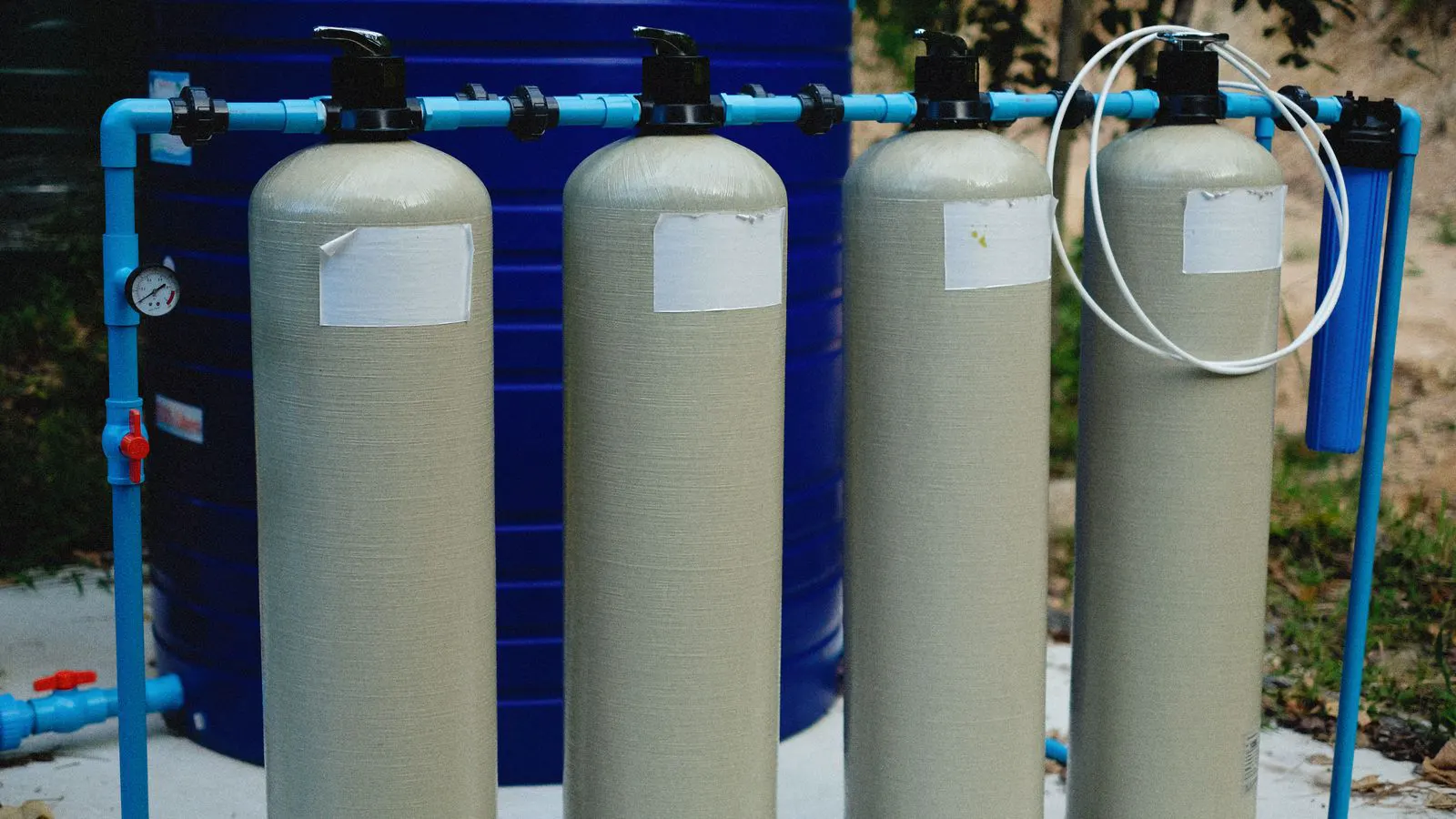
Explainer: The Physics Behind Filter Efficiency and Pressure Drop
Filtration physics connects particle capture to energy cost through pressure drop. This explainer defines key terms, shows how mechanics affect sourcing, and provides a plain-language worked example for industrial buyers.
- Filter efficiency and pressure drop share a common physical root: the resistance of the filter medium to airflow or liquid flow.
- Capturing finer particles usually increases resistance, which raises the energy required to move the fluid through the system.
- Sourcing decisions should account for pressure drop at operating conditions, not just initial clean-state performance.
- The filtration mechanics of a media shape determine how particles are retained and how the filter ages over time.
- A single pressure drop reading without context is not enough to compare filters across different service conditions.
What filtration physics actually means in practice
Filtration physics describes how fluid, particles, and filter media interact inside a filtration device. In a plant, the goal is simple. The fluid moves, particles hit a barrier, and some particles stay while others pass through. The physics behind this interaction determines two numbers that buyers and engineers track every day: filtration efficiency and pressure drop.
These two values are not independent. They are linked by the resistance of the filter medium to flow. A filter that captures more particles at a given size usually creates more resistance. That resistance shows up as pressure drop across the unit. The energy cost of running the system rises as a result.
This relationship is why a low-cost filter with a slightly higher pressure drop can be more expensive over its service life. A filter with a higher initial cost but lower resistance may cost less in energy and maintenance over time.
How pressure drop relationship drives energy cost
The pressure drop relationship describes how the pressure difference across a filter changes as fluid flows through it. The basic form of the relationship is that pressure drop increases with flow rate and with the resistance of the media. When a filter is clean, resistance is lower. As particles collect, resistance rises. The pressure drop grows.
In a typical industrial system, the fluid is forced through the filter by a fan, pump, or blower. The equipment must work against the pressure drop. If the pressure drop doubles, the power required to move the same volume of fluid usually rises substantially. The exact power increase depends on the equipment, but the direction of the effect is consistent. More resistance, more energy.
This is where filtration physics connects directly to operating cost. A filter that captures 99 percent of particles at a certain size may cost more in energy than one that captures 98 percent. The difference is often small enough that the first filter looks better on a data sheet. But over thousands of hours of operation, the energy difference can become meaningful.
What filtration mechanics tell you about filter behavior
Filtration mechanics explains how particles are retained by the filter medium. There are several retention mechanisms. Impaction occurs when a particle moves in a straight line and strikes a fiber or pore edge. Gravity or sedimentation can pull particles down onto a surface. Diffusion helps very small particles drift into the media. Interception happens when a particle touches a surface and sticks. Electrostatic attraction can also hold particles, especially in fine filtration.
Each mechanism has different sensitivity to flow speed, particle size, and media geometry. A media with a dense, open structure may rely more on interception. A media with a finer, layered structure may rely more on diffusion and impaction. The result is a different relationship between efficiency and pressure drop.
This matters for sourcing. Two filters can have the same rated efficiency at the same particle size, but their pressure drop curves can differ. One may rise slowly at first and then increase rapidly. The other may rise steadily. The shape of the curve tells you how the filter will behave as it fills with particles.
How media structure shapes the efficiency to pressure drop curve
The structure of the filter media determines the path that fluid and particles take. Media can be flat, pleated, spiral wound, bag, cartridge, or panel. Each shape changes the surface area available for capture and the length of the flow path.
A pleated media, for example, packs a large surface area into a small volume. This allows more capture at a given pressure drop. A flat plate media has less surface area per unit volume. A bag filter spreads the load across a large volume of media. A cartridge filter concentrates the flow through a compact body.
The pore size and fiber diameter also matter. Smaller pores and finer fibers capture more particles. They also increase resistance. The relationship between pore size, fiber diameter, porosity, and pressure drop is the core of filtration physics in filter design.
When comparing filters, the clean-state pressure drop is a useful starting point. But the dirty-state pressure drop and the rate at which it increases are often more telling. A filter with a low clean-state pressure drop may load quickly and spike. A filter with a slightly higher clean-state pressure drop may load slowly and stay stable.
A plain-language worked example
Imagine two filters rated to remove the same particle size at the same efficiency. Both are installed in the same system and operate at the same flow rate.
Filter A has a low clean-state pressure drop. It uses a media with a larger pore structure and a more open arrangement. It captures the target particles well, but it does so with less resistance. As particles collect, its pressure drop rises slowly at first, then climbs faster as the media fills.
Filter B has a higher clean-state pressure drop. It uses a finer, more compact media. It captures the same particles with a steeper resistance from the start. As it loads, its pressure drop increases more steadily and predictably.
The system runs for a month. Filter A starts with lower energy use. Over time, its pressure drop rises and the energy cost climbs. Filter B starts with higher energy use, but its rise is gentler. At the end of the month, the energy difference may be smaller than expected.
This example shows why a single efficiency number and a single pressure drop number are not enough. The shape of the pressure drop curve, the expected load, and the operating duration all matter. A filter that looks efficient on paper may not be the most economical choice in service.
How this affects sourcing decisions
Sourcing decisions should start with the operating conditions, not just the efficiency rating. The buyer needs to know the fluid type, the flow rate, the inlet particle loading, and the required particle size to be captured. Then the pressure drop relationship becomes the main comparison tool.
A supplier report that gives only the clean-state pressure drop is incomplete. A useful report gives the clean-state value and the dirty-state value, or at least the expected rise over a defined load. If the report does not provide that, the buyer should ask for it. If the report provides only a single number, the buyer should treat it as a starting point, not a guarantee.
The filtration mechanics of the media also affect service life. A media that relies heavily on interception may load quickly in a high-velocity stream. A media that relies on diffusion may handle fine particles more gracefully. The retention mechanism should match the service.
When comparing vendors, the same efficiency rating does not mean the same pressure drop. The same pressure drop does not mean the same service life. The physics behind the numbers should be part of the evaluation.
What to check before you buy
Before selecting a filter, gather the operating data. Record the flow rate, the fluid type, the inlet particle concentration, and the required capture size. Ask the supplier for the pressure drop at clean and loaded conditions. Ask for the media type and the retention mechanism. Ask for the expected pressure drop rise over time.
Compare filters at the same operating point. Do not compare a clean-state value against a loaded value. Do not compare a low-flow value against a high-flow value. Use the same conditions for every option.
The most common mistake is to choose based on the lowest initial pressure drop without checking the long-term curve. The second most common mistake is to choose based on the highest efficiency rating without checking the energy cost. The best choice is usually the one that matches the service, not the one with the best single number on a data sheet.
The physics is straightforward. More capture, more resistance, more energy. The engineering is in matching the media and the operating conditions so the energy cost stays acceptable.
Frequently asked questions
Why does a filter with higher efficiency usually have a higher pressure drop?
Higher efficiency means the media retains more particles, which increases resistance to flow. That resistance shows up as a higher pressure drop across the filter.
Can two filters have the same efficiency but different pressure drops?
Yes. The media structure, pore size, fiber diameter, and flow path all affect pressure drop. Two filters with the same rated efficiency can have different resistance curves.
Is clean-state pressure drop enough to compare filters?
No. Clean-state pressure drop is a starting point. The dirty-state pressure drop and the rate of increase are often more useful for comparing service cost and life.
How do filtration mechanics affect sourcing decisions?
The retention mechanism tells you how the filter will load and how its pressure drop will change over time. A media that relies on interception may load differently than one that relies on diffusion.
What is the main risk of ignoring filtration physics when buying a filter?
You may choose a filter that looks efficient and cheap at first but costs more in energy, maintenance, or replacement over its service life.